

Key Takeaways:
- Dual diagnosis treatment helps people manage addiction and mental health conditions at the same time for stronger recovery stability.
- PHP and IOP programs can provide structured dual diagnosis treatment for anxiety, depression, trauma, PTSD, and substance abuse recovery.
- Breakaway Health in Costa Mesa offers dual diagnosis treatment with therapy, outpatient rehab, and long-term recovery support.
Getting Real Support for Mental Health and Addiction in Costa Mesa
Struggling with both addiction and mental health symptoms can make daily life feel difficult. Conditions like anxiety, depression, trauma, and substance abuse often affect each other and can increase relapse risk when left untreated. Dual diagnosis treatment helps people manage both conditions together for better long-term stability. Breakaway Health in Costa Mesa provides dual diagnosis treatment through PHP, IOP, day treatment, and night treatment programs for addiction and mental health care.
What Is Dual Diagnosis Treatment in Costa Mesa?
Dual diagnosis treatment is a type of addiction and mental health care that treats both conditions together. Many people struggling with substance abuse also experience mental health disorders that affect emotions, behavior, relationships, and daily functioning.
Dual diagnosis treatment may help people dealing with:
- Alcohol addiction
- Drug addiction
- Anxiety
- Depression
- PTSD
- Trauma related symptoms
- Bipolar disorder
- Mood disorders
Treating addiction without addressing mental health symptoms can make recovery more difficult. Many people use drugs or alcohol to cope with emotional pain, stress, panic, or trauma symptoms. At Breakaway Health, dual diagnosis treatment focuses on helping clients improve emotional stability while building healthier coping skills for addiction recovery.
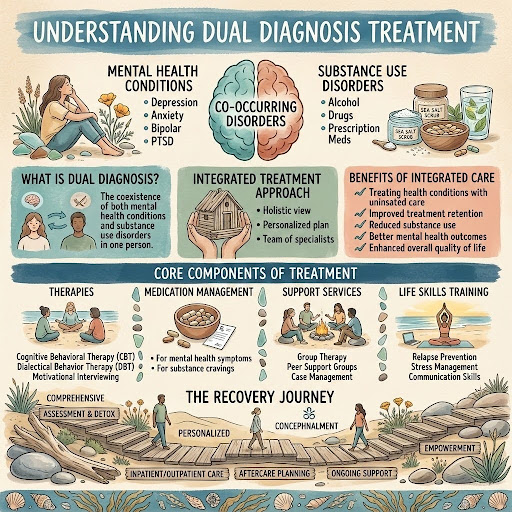
What Mental Health Disorders Are Common in Dual Diagnosis Treatment?
Several mental health disorders commonly appear alongside addiction and substance abuse problems. These conditions may develop before addiction starts or become worse because of long-term substance use.
Common mental health disorders treated in dual diagnosis programs include:
Anxiety Disorders
People with anxiety may use drugs or alcohol to manage panic, fear, stress, or racing thoughts.
Depression
Depression often affects motivation, sleep, energy, and emotional stability. Substance use may temporarily numb emotional pain but usually worsens symptoms over time.
PTSD and Trauma Disorders
Trauma symptoms may include flashbacks, nightmares, panic, emotional numbness, or difficulty feeling safe. Substance abuse is common among people struggling with unresolved trauma.
Bipolar Disorder
Mood swings connected to bipolar disorder may increase impulsive behavior and substance use risk.
Panic Disorders
Panic attacks and constant fear can lead some people to misuse alcohol or drugs for temporary relief.
At Breakaway Health, dual diagnosis treatment helps clients address both addiction and mental health symptoms together instead of separating treatment between different providers.
How Does Dual Diagnosis Treatment Help With Addiction Recovery?
Dual diagnosis treatment helps addiction recovery by addressing the emotional and psychological symptoms connected to substance abuse. Many people relapse when mental health symptoms remain untreated.
Treatment often helps clients:
- Identify emotional triggers
- Build coping skills
- Reduce relapse risk
- Improve emotional regulation
- Manage stress more effectively
- Improve relationships and communication
Dual diagnosis treatment also gives clients a better understanding of how mental health symptoms and addiction affect each other.
For example, someone struggling with anxiety may use alcohol to calm panic symptoms. Another person dealing with depression may misuse drugs to escape emotional numbness or hopelessness.
At Breakaway Health, treatment focuses on helping clients improve both emotional health and addiction recovery at the same time.
What Are the Signs You May Need Dual Diagnosis Treatment?
Many people do not realize their mental health symptoms and substance abuse may be connected. Dual diagnosis treatment may help if addiction and emotional symptoms continue affecting daily life together.
Signs you may need dual diagnosis treatment include:
- Using drugs or alcohol to cope with emotions
- Frequent anxiety or panic attacks
- Depression that worsens during sobriety
- Mood swings or emotional instability
- Trauma symptoms or flashbacks
- Relapse after emotional stress
- Difficulty managing daily responsibilities
- Isolation from friends or family
Some people enter treatment believing addiction is the only issue, then realize untreated mental health symptoms continue driving substance use behaviors. At Breakaway Health, clinical assessments help determine whether dual diagnosis treatment may be appropriate for your recovery needs.
What Types of Therapy Are Used in Dual Diagnosis Treatment?
Dual diagnosis treatment often includes multiple forms of therapy to help clients manage addiction and mental health symptoms together.
At Breakaway Health, therapy options may include:
Individual Therapy
One on one counseling helps clients process emotions, trauma, stress, and recovery challenges privately.
Group Therapy
Group sessions help clients build communication skills, accountability, and peer support during treatment.
Family Therapy
Family therapy helps improve communication, rebuild trust, and address relationship stress connected to addiction and mental health conditions.
Trauma Therapy
Trauma therapy helps clients process painful experiences that may contribute to anxiety, PTSD, depression, or substance abuse.
Couples Therapy
Couples counseling may help improve relationship stability and communication during recovery.
Grief Therapy
Grief counseling helps clients process loss, emotional pain, and unresolved sadness connected to addiction or mental health struggles.
What Is the Difference Between Standard Rehab and Dual Diagnosis Treatment?
The main difference between standard rehab and dual diagnosis treatment is that dual diagnosis programs treat both addiction and mental health conditions together.
Standard rehab programs may focus mainly on stopping substance use. Dual diagnosis treatment also addresses emotional symptoms that may contribute to relapse risk.
Dual diagnosis treatment often includes:
- Mental health counseling
- Psychiatric support
- Trauma therapy
- Emotional regulation skills
- Anxiety and depression treatment
This type of care is important because untreated mental health conditions can make long-term sobriety more difficult. At Breakaway Health, dual diagnosis treatment focuses on helping clients improve emotional health while building recovery stability through outpatient addiction treatment programs.
How Long Does Dual Diagnosis Treatment Usually Last?
The length of dual diagnosis treatment depends on several factors including addiction severity, mental health symptoms, relapse history, and treatment progress. Some clients participate in treatment for several weeks while others may benefit from longer outpatient support.
Treatment length may depend on:
- Emotional stability
- Relapse risk
- Trauma symptoms
- Support system at home
- Progress in therapy
- Mental health symptom improvement
Many people begin with higher levels of care like PHP before transitioning into IOP or alumni support programs. At Breakaway Health, treatment plans are adjusted based on clinical progress and recovery needs instead of using a fixed timeline for every client.
Can PHP and IOP Programs Treat Dual Diagnosis Conditions?
Yes, PHP and IOP programs can both treat dual diagnosis conditions alongside addiction recovery.
PHP for Dual Diagnosis Treatment
PHP provides a high level of structure and support for people struggling with severe mental health symptoms or high relapse risk.
PHP may help people who:
- Recently relapsed
- Completed detox
- Experience strong cravings
- Struggle with severe anxiety or depression
- Need daily support
IOP for Dual Diagnosis Treatment
IOP provides continued therapy and relapse prevention support with more flexibility for work, school, or family responsibilities.
IOP may help people who:
- Have gained some stability
- Need ongoing therapy
- Want flexible treatment scheduling
- Need support during daily life transitions
What Are the Statistics on Dual Diagnosis and Substance Abuse in the United States?
Dual diagnosis conditions affect millions of Americans each year. Research consistently shows a strong connection between substance abuse and mental health disorders.
National healthcare research shows:
- Millions of adults experience both mental health disorders and substance use disorders annually
- Anxiety and depression are among the most common co-occurring mental health conditions
- People with untreated mental health symptoms often face higher relapse risk
- Integrated dual diagnosis treatment improves long-term recovery outcomes
A lot of people delay treatment because they believe addiction and mental health conditions should be treated separately. In reality, treating both together often provides better emotional stability and recovery support.
How Do You Choose the Right Costa Mesa Dual Diagnosis Treatment Program?
Choosing a Costa Mesa dual diagnosis treatment program depends on your symptoms, relapse risk, support system, and daily responsibilities.
When choosing a dual diagnosis treatment program, consider:
Mental Health Symptoms
Anxiety, depression, trauma symptoms, PTSD, and mood instability may require structured clinical support.
Relapse Risk
Frequent relapse history may require higher levels of care like PHP treatment.
Program Flexibility
Some people need outpatient programs that allow them to continue work, school, or family responsibilities.
Therapy Options
Strong dual diagnosis programs should include therapy services that address emotional health alongside addiction recovery.
Long-Term Support
Ongoing support through alumni programs and outpatient care may help reduce relapse risk after treatment.
At Breakaway Health, clients receive treatment recommendations based on clinical needs instead of a one-size-fits-all approach.
Why Do People Choose Breakaway for Dual Diagnosis Treatment?
Many people choose Breakaway Health because we are a family owned treatment center with over 33 years of experience helping individuals and families struggling with addiction and mental health conditions. Clients receive structured support through multiple levels of care including PHP, IOP, day treatment, night treatment, adolescent treatment, and alumni programs. Breakaway Health also offers therapy services like trauma therapy, family therapy, group therapy, couples counseling, grief therapy, and individual therapy so clients can receive support for both mental health and substance abuse in one place. Our goal is to provide a supportive environment where people feel respected, understood, and motivated to build long-term recovery stability.
Start Dual Diagnosis Treatment in Costa Mesa, CA
Dual diagnosis treatment helps people manage addiction and mental health conditions together instead of treating them separately. Programs like PHP and IOP provide structured outpatient care for individuals struggling with anxiety, depression, trauma, PTSD, and substance abuse. Breakaway Health in Costa Mesa offers dual diagnosis treatment with therapy, relapse prevention support, and outpatient addiction care designed to help clients build healthier coping skills and long-term stability. With over 33 years of experience helping individuals and families through addiction and mental health treatment, Breakaway Health continues to provide supportive care focused on recovery and emotional wellness. Call Breakaway Health Today!
FAQs
What is an example of dual diagnosis?
An example of dual diagnosis is someone living with depression and alcohol addiction at the same time. Dual diagnosis treatment addresses both the mental health disorder and substance use disorder together for better long-term recovery outcomes.
Is dual diagnosis a disability?
Dual diagnosis itself is not officially classified as a disability, but the mental health conditions and substance use disorders involved may qualify as disabilities depending on their severity and impact on daily life.
Can dual diagnosis be cured?
Dual diagnosis is typically managed rather than cured. With professional treatment, therapy, medication management, and ongoing support, many people achieve lasting recovery and improved mental health.
Is dual diagnosis common?
Yes, dual diagnosis is very common. Many individuals struggling with addiction also experience mental health disorders such as anxiety, depression, PTSD, or bipolar disorder.
How does age affect dual diagnosis?
Age can influence how dual diagnosis develops and is treated. Younger adults may face different risk factors than older adults, while long-term substance use and mental health conditions can become more complex with age.